I’m wrapping up my time in Peru, and looking forward to returning to the states in a few days. I have a ton to think about and a couple potential projects percolating: all in all it was a hugely useful and successful field session.
Unfortunately, Shellcatch, the sustainability certification company I’m hoping to collaborate with, rescheduled their visit for next month, but I went ahead with my pre-assessment surveys. I spent all of last week in San José interviewing fishermen and their families. Of course, it’s difficult to predict what the right questions will be before a project has started, but I thought it would be a good idea to get a sense of current rates of bycatch, flows of fish and money, and people’s attitudes toward their community, environment, and economic situation now, and track any changes as the certification project progresses.
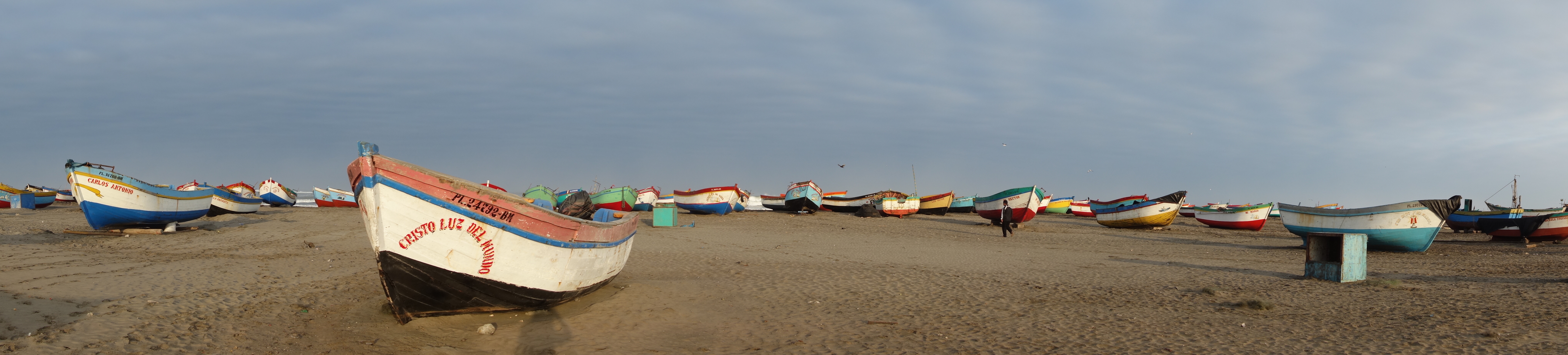
Brightly-colored “chalanas” bring fishers out to their bigger boats anchored offshore: one of many components of the fishing economy in San José.
I also asked questions about the role of women in the fishery and in the community, because I was interested, because women, as an integral part of the community and economy, also stand to be impacted by the Shellcatch project, and also because ProDelphinus is waiting to hear back from a grant to fund a women’s education and empowerment program. In order to run an effective program, it would first be helpful to better understand how the women are acting in the community, and what their needs are. I’m hopeful that the grant goes through, since educating women is arguably the most powerful environmental (and economic, and social, you name it) intervention possible.
I thought I’d get a chance to interview maybe 20 or 30 people at most, but after a whirlwind week I returned to Lima with 58 completed surveys! I had the incredible good fortune of working with David Sarmiento, a government official who collects fisheries landings data. He was born and raised in San José and can not only greet every single person in the town by name, but also instantly recall everything about their fishing habits, down to the scientific species names. He’s a beloved and respected figure throughout the town, and just being associated with him meant that people were happy to talk to me. Minutes after his introduction, people I hadn’t even met before welcomed me into their homes, plied me with food and gifts, and chatted candidly about their bycatch, fish prices, and difficulties with the powers that be. I’m going to be completely spoiled for all future survey work.
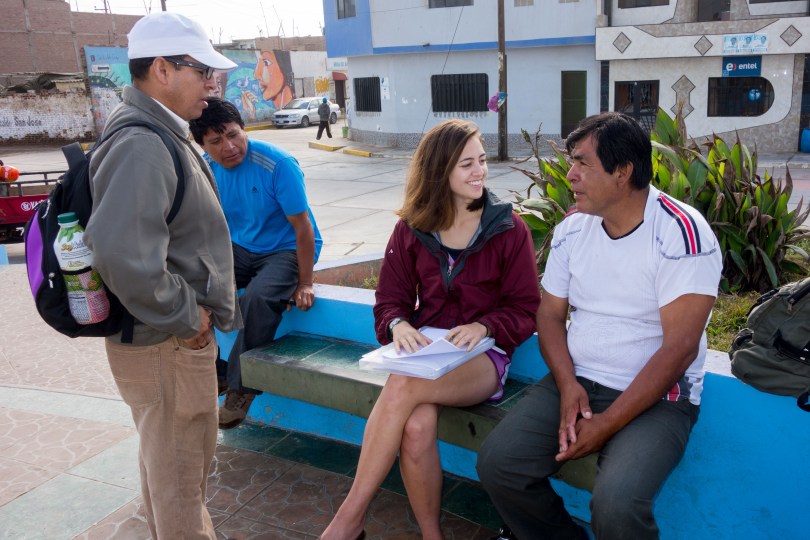
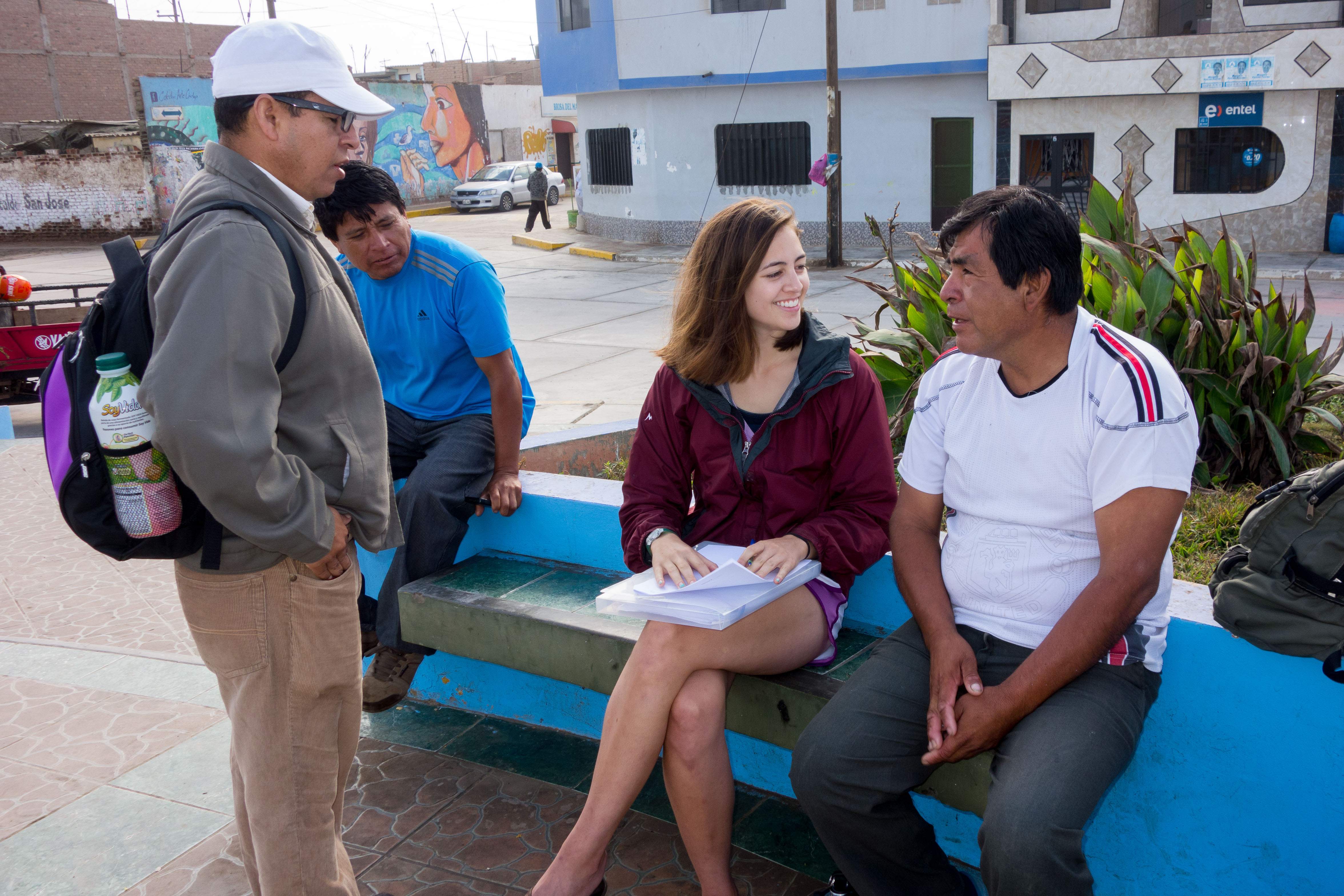
David (in the hat) was irreplaceable in his help in introducing me to interviewees and explaining some of their responses if they spoke too quickly!
My results are a basis waiting for future comparison, but I did learn a ton. For example, I had expected that women would primarily participate in the fishery and therefore economy by processing and selling their husbands’ fish. And, yes, most of them do. But I was surprised to learn that in addition, almost every woman that grows up in San José also learns several types of artwork—painting, cross stitch, embroidery, crochet. I was further surprised that during lean fishing times (which are common in Peru, because El Niño creates so much variability), rather than the men seeking other jobs, it’s the women that step up and sell their artwork, or sell their cooking. In studies of community resilience (the ability to withstand shocks or disruptions, like a big El Niño event), women are generally depicted as vulnerable victims, a marginalized group that loses out when shifts occur in the community. Not so here: the women seem to be a source of resilience! They are the ones that sustain their families in whatever way they can while their husbands, fathers, and sons wait for work, at the mercy of an unpredictable environment and a declining resource.
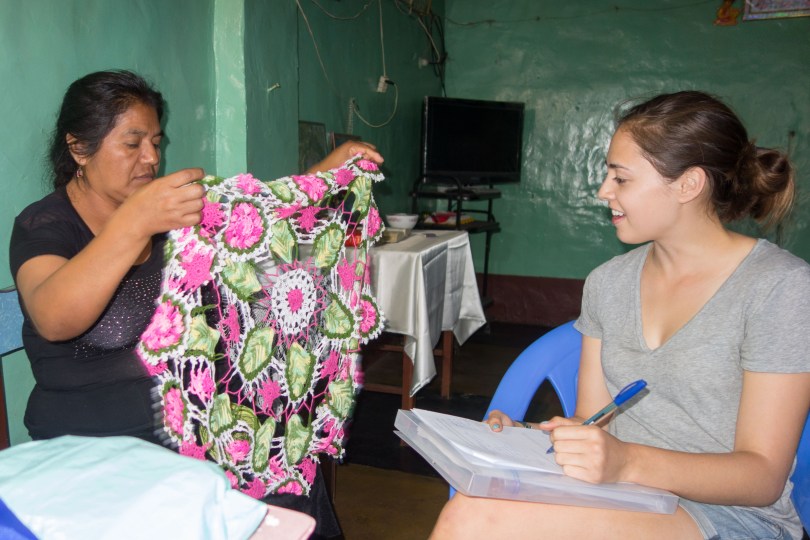
This woman showed me some of her beautifully detailed crochet work.
As always, the situation is complex, with intricate economic and social relationships within the community as well as with the government, broader market structure, and industrial fishery–I have a lot of information to take home with me and process over the next weeks and months. Many of the fishermen expressed eagerness to learn about how to improve their fishing methods, and how to avoid entangling turtles and mammals, primarily because they pose a threat to their expensive fishing gear (and, in the case of whales, their boats and lives), but some also expressed affection and a sense of stewardship for the “animalitos.” As for the women, they’re eager to find a way to export their artwork to broader markets, and expressed interest in education in nutrition, talking to their daughters about sex (it’s not uncommon to see girls pregnant at 14), and household accounting.

Interviews on the fly: tables and chairs weren’t always an option–I interviewed this fisherman in his “mototaxi.”
I’m overwhelmed with gratitude at the generosity and kindness of everyone I worked with, and am eager to return. When I asked one older fisher if he had any additional comments or questions, he looked at me and said, “I want for you to finish your studies. And I want for you to then come back, and to help us.” That’s exactly what I plan to do.
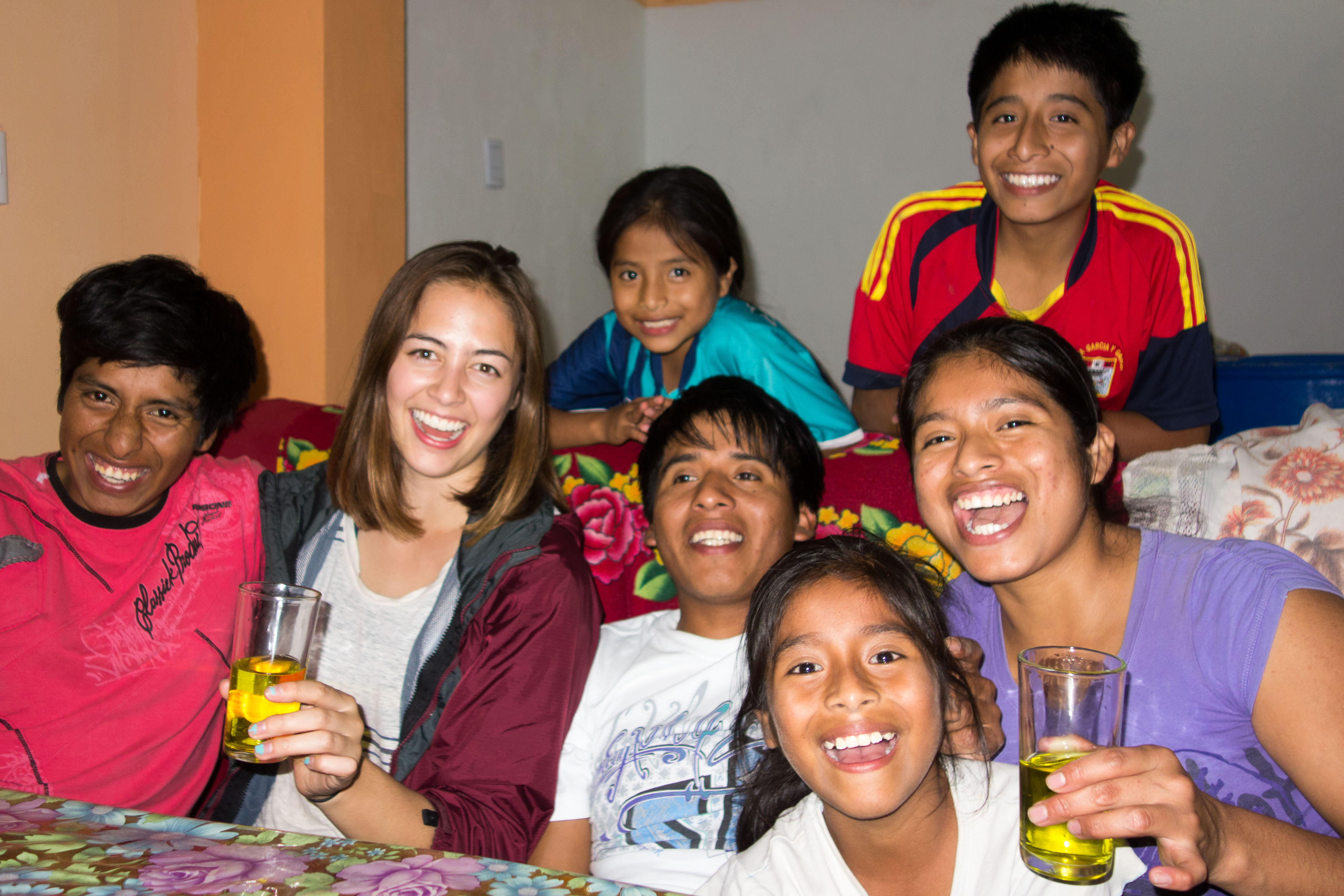
People welcomed me into their homes and into their families! I spent my evenings goofing off with this bunch and teaching them some English.
Mil gracias also to David, and everyone at ProDelphinus, especially Joanna and Jeff, and my wonderful field assistants Sergio, Astrid, and Diego. Nos vemos pronto!
 A Drop in the Ocean