This spring I was the teaching assistant for my advisor’s Marine Conservation course, one of the handful of courses offered to undergraduates who choose to spend a quarter at the marine station. Rather than a standard lecture format, the course consisted of a series of guest speakers who work in various aspects of marine conservation. Many were biologists, but we also heard from social scientists, geographers, lawyers, educators, and journalists. We also went on field trips to visit the elephant seals in Año Nuevo, go whale watching, tour the oceanographic vessels at the Monterey Bay Aquarium Research Institute, and go behind the scenes at the Monterey Bay Aquarium. The fifteen students contributed to their own blog about their experiences with the course, which you can read here.
Their capstone final project was to make a short film about marine conservation or their personal connection to the ocean. Many of the students (and their teaching assistant) had never made films before, so we organized a few workshops with a local director and editor on the basics of cinematography, sound production, and editing. Armed with just a few hours of training and a pile of cobbled together equipment, they worked throughout the quarter on their three-minute films, which they showcased in a final film festival at the station. I was so impressed by the quality and creativity of their work–check out their films on the Humans of Planet Ocean website, another Stanford undergrad initiative to engage the Millennial generation with the oceans.
I wrote a short piece about my research as part of a science communication workshop through MARINE (Monterey Area Research Institutions’ Network for Education), a professional development program that links marine science campuses around the Monterey Bay. Check it out here, and also read about some of the other amazing research going on in the area!
I spent my spring break in Washington DC for a whirlwind introduction to how science affects policy. I was one of twenty Stanford graduate students and postdocs from different departments who had applied to Stanford’s Rising Environmental Leaders Program (RELP), and a few months of meetings and communications training culminated in this “DC Boot Camp” to see firsthand how policy is developed and how to make our research relevant to politicians and the public.
Our five-day trip was crammed full of meetings and panels—lobbyists, congressional staffers, reporters, federal agency scientists, policy advisors, think tank directors. We heard from recent PhD graduates in year-long government fellowships and senior executives who had been in Washington for decades. We sat in on congressional budget hearings (including a particularly contentious grilling of the EPA’s Gina McCarthy), practiced our research “elevator pitches” with communications experts, and flexed our networking abilities. Some highlights were a special trip to the White House Executive Offices to meet with some of Obama’s advising team, and a talk from Dr. John Holdren, Assistant to the President for Science and Technology.
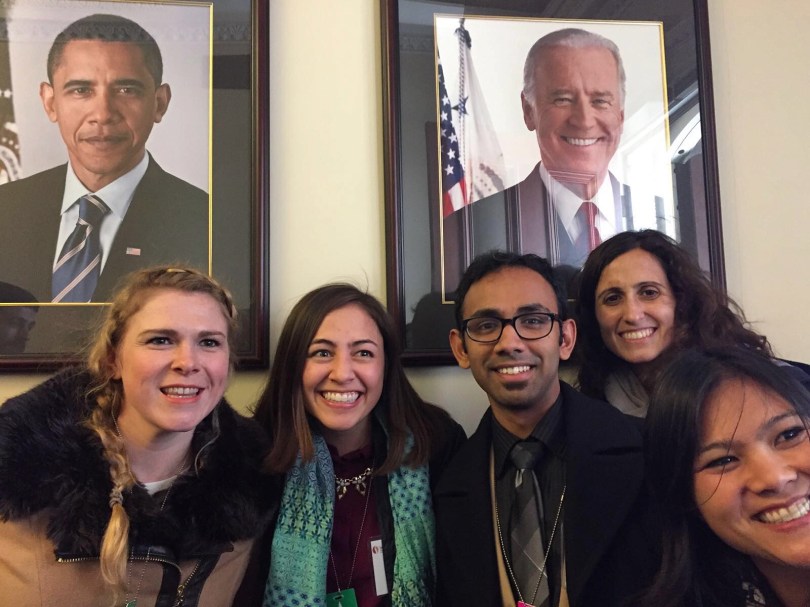
We were thrilled to visit the White House Executive Offices. The Obamas, unfortunately, were in Cuba.
It was, as everyone continually reminded us, a “fascinating/opportune/cataclysmic” time to be in DC, especially to hear the candid realities of jobs (or entire agencies) that evaporate after an election. It was also interesting to hear political science insights about how environmental politics have evolved at the national level—for example, it’s rare for major environmental legislation to pass while unemployment is high, and the polarization of climate change along party lines has occurred fairly recently, largely as a knee-jerk response to Obama’s policies. Unfortunately, this polarization has only solidified, and it might require a conservative but pro-environment president—a “Nixon in China” scenario—to get cohesive federal climate action. It was also fascinating and a trifle unsettling to hear political scientists and policy experts speculate about how social media and increasing economic disparity are radically changing our political process in ways they can’t understand or predict.
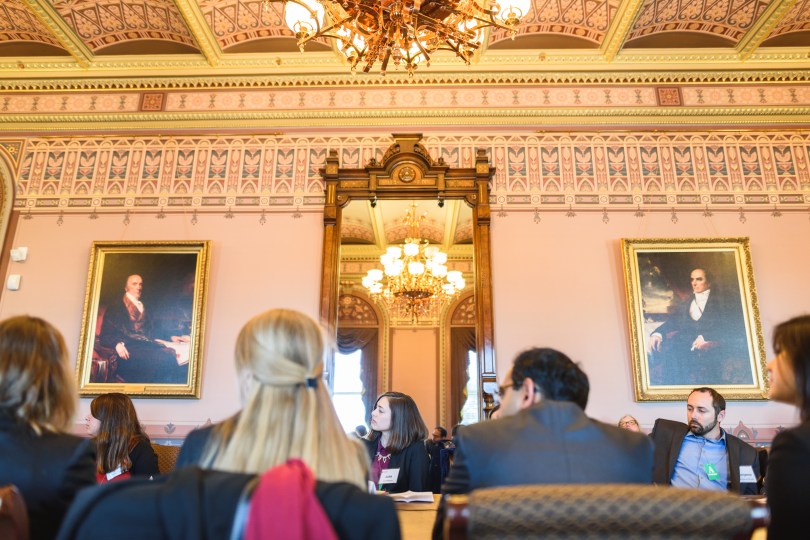
Our White House Executive Office panel took place in what is probably the grandest conference room I’ll ever enter. Photo courtesy of Stanford Woods Institute/Nathan Mitchell
On the whole, though, I emerged feeling hopeful. Many people emphasized that while gridlock in Congress means we won’t get national level change anytime soon, more nimble state legislatures, especially in California, are pioneering innovative and positive policies, and state and local level governments can have enormous influence. I was also inspired to see how many different ways science can make its way to policymakers—I’ve often deflected future career goal inquiries with hand wavy talk of the “science to policy interface,” and was excited to see the diversity of concrete career paths. I had felt frustrated that it seemed that you could only have an influence on real-world policy if you were a famous superstar senior professor. After this week, it’s clear that while it can certainly help to be a famous academic, policymakers rely far more on reputable non-profits and think tanks, federal science agencies like NOAA and USGS, and, very often, their staff. Unsurprisingly, congressmen aren’t delving into the primary literature–they don’t have journal access on the hill, much less the time and patience for dry scientific papers. Policy “windows” do open with majorities in the right places and a groundswell of public sentiment, and the best thing to do is be prepared with sound science and solid communications skills, and to jump at the opportunity.
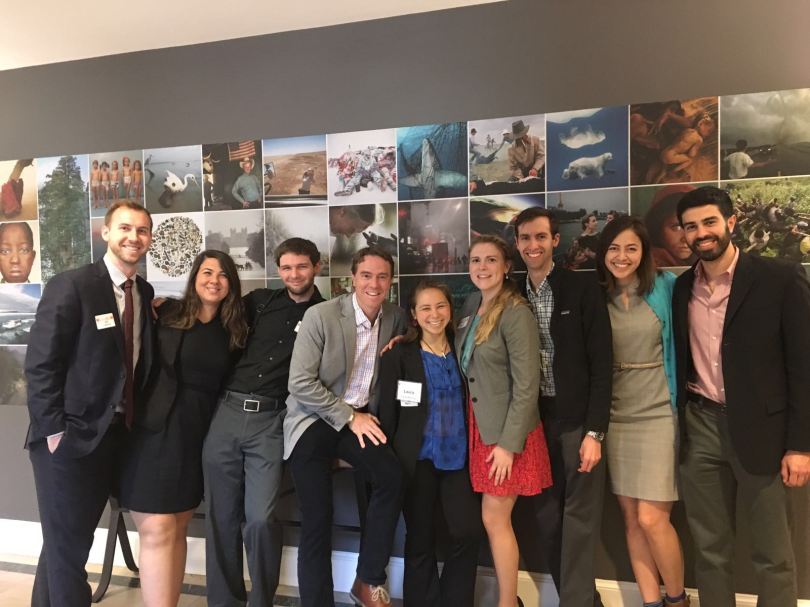
Our media panel brought us to the fabulous National Geographic offices.
Our week concluded with a celebratory lunch and remarks, and we were set free to revel in peak bloom of the cherry blossoms. I’m so glad I had this opportunity to experience the realities of policy and the diversity of possible careers, and most of all to meet the wonderful and inspiring group of people that were my fellow RELPers.
I’m looking out at some much needed California rain, a sign of the season’s El Niño. You may have heard that this year’s is a “Godzilla” El Niño, already the strongest in recorded history (although we’ve only been keeping track since 1950), but what is El Niño, exactly?
The short version: it’s one phase of a cycle of wind and ocean circulation patterns that brings warmer waters to the west coast of the Americas, jumbling up weather across the globe. That means more rain for drought-stricken California and a warmer winter for the East Coast, but other places are drier than usual: Indonesia is seeing massive forest fires, and South Africa may face water shortages.
El Niño matters because these big weather changes can have big economic and social impacts: storm damage, floods, agricultural failures, fisheries crashes. We also need to understand El Niño because these large-scale climatic cycles and their interactions are crucial to our understanding of climate change, and conditions in El Niño can show us what’s to come in warmer years.
Okay, now the long version
There are many wonderful and interactive explanations of El Niño online, and I especially recommend clicking around on NOAA’s website.
Under normal conditions, the trade winds blow east to west across the Pacific Ocean (basically hot air rising at the equator and then getting left behind as the earth rotates). They push water up by Asia and Australia, creating a slope. Think about blowing on a hot cup of coffee—the air pushes the coffee up against opposite side of the mug. The trade winds take warm surface waters and pile them up near Indonesia. Meanwhile, on the west coast of the Americas, cold, deep ocean water is pulled up to replace the water getting pushed away. This creates a massive circulation with warm downwelling in the western Pacific and cold upwelling in the eastern Pacific.
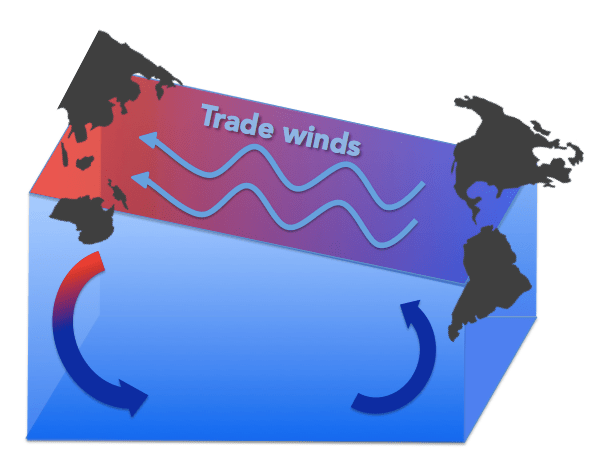
Under normal conditions, the trade winds drive circulation in the Pacific Ocean by pushing warm water up toward Asia and Australia. The piled up mass of water sinks down, while on the other side of the ocean, cold deep water is pulled up.
During El Niño, the trade winds weaken, for reasons we still don’t know. Just like when you stop blowing on your coffee and it levels out, warm water from the western Pacific flows back down toward the Americas.
All that warm water sloshing toward California means lots of warm, moist air, a recipe for rain. The flow of water toward the Americas (called a Kelvin wave) also disrupts the upwelling of cold water at the eastern Pacific, with big consequences for fisheries.

This is this week’s NOAA report of sea surface temperature anomaly (departures from average, with red representing warmer than usual and blue, cooler than usual). The warm (red) tongue by Peru is indicative of El Niño.
In fact, Peruvian fishermen who for centuries noticed changes in currents and the disappearance of their fish around Christmastime are credited with the name El Niño, Spanish for “the boy,” referring to the birth of baby Jesus. In the US, we tend to see the biggest effects between December and March. El Niño is part of a cycle that we complete every 3-7 years, and we call the opposite phenomenon (stronger winds, stronger upwelling, colder water) “La Niña,” the girl. The standard way we measure El Niño events, and thus make claims about a strong El Niño or a strongest ever El Niño, is by how much warmer than usual the ocean surface is in a standard region of the central Pacific.

We use the Niño 3.4 region (center, above) to measure El Niño events. If the sea surface temperature is 0.5°C warmer than average, it’s officially an El Niño. This November, the temperature in the 3.4 region was 2.35°C warmer than average Novembers! This is on par with the last huge El Niño we had, in 1997-98, when the November departure was 2.33°C.
What does this mean for fisheries?
The cold water upwelling off the coast of California and Peru brings up the nutrients that fall to the ocean floor, so those waters can support a huge amount of marine life. That’s why Peru is the second biggest fish exporter after China—they have extremely productive waters. During El Niño, with warmer, less nutritious waters and less upwelling, there isn’t enough food and fish populations crash. Anchovies, Peru’s staple, do best in cold nutrient-rich water, and El Niño-induced anchovy crashes are brutal to Peru’s economy. Fish also move closer inshore during El Niño to find colder water (this is why we’ve seen anchovies and unusual pelagic red crabs in Monterey Bay). This can be great for the small-scale fishermen, the guys I was working with, but it can also mean that the big boats sneak further inshore, creating competition and conflict. Big storms and flooding also wash freshwater and debris to coastal waters, which can kill fish and damage nets. Every El Niño event is different, and they bring complex, interacting effects, so it’s tough to figure out how to manage fisheries in the face of all this variability. Studying fisheries now can give us tools to deal with the next big El Niño, and make sure that management promotes the resilience of both the fish and the fishermen.
For more on El Niño, check out:
Daniel Swain’s California Weather Blog
Also, in light of the COP21 Paris talks/living on this planet, please read these excellent New York Times articles about climate change!
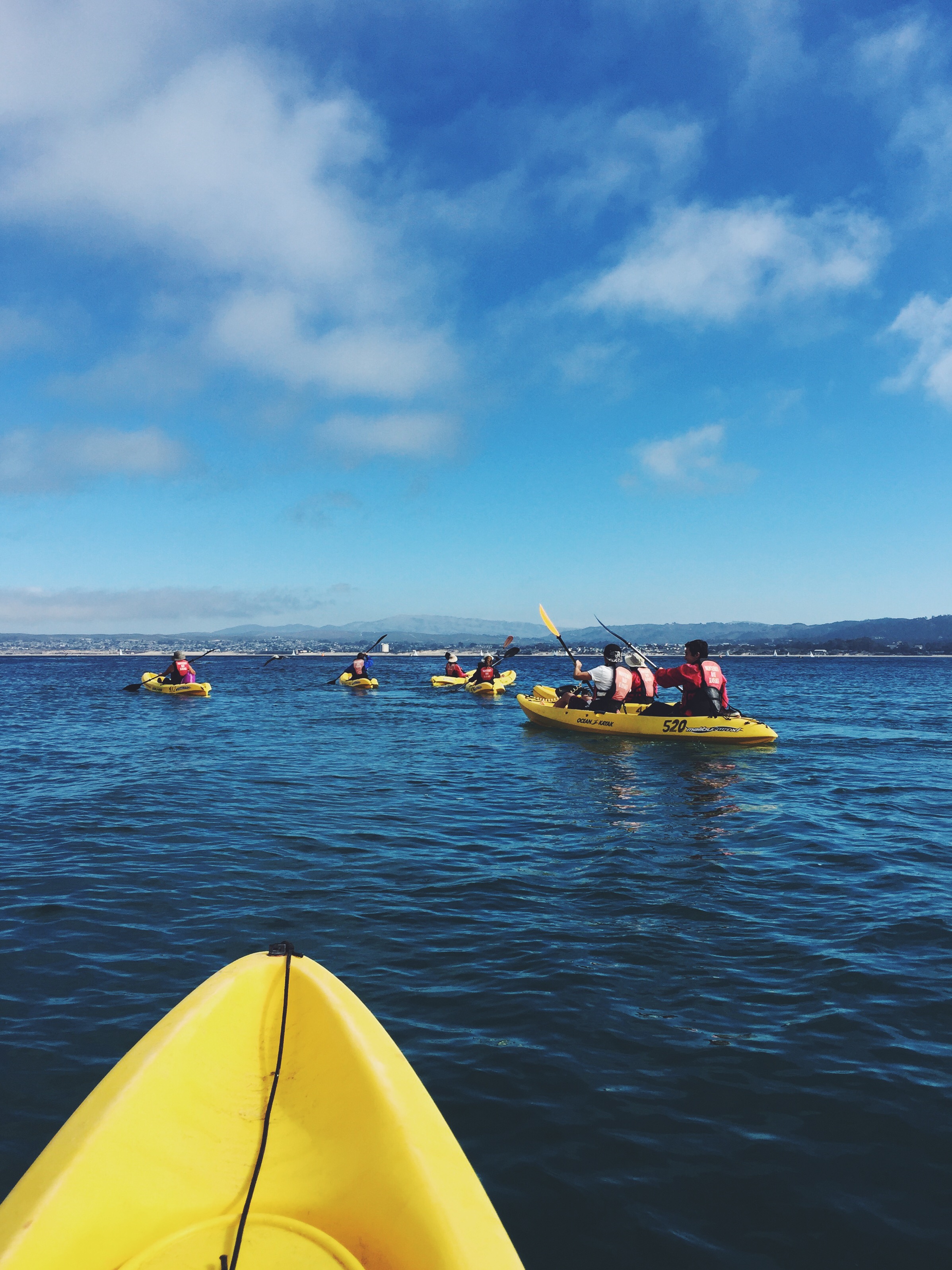
Over the weekend, I taught a course while kayaking in Monterey Bay. Stanford’s core undergrad Biology course allows grad students and postdocs to teach one-day elective “Explorations” courses on any biosciences subject we want, providing students exposure to specialized topics. When the call for teachers came out, I knew I wanted to teach one–students don’t often get a chance to see Hopkins Marine Station (where I work, Stanford’s marine biology outpost in Monterey, 90 miles down the coast from the main campus) without committing to spending a full quarter here, and student reviews indicated that these Explorations courses had inspired a lot of interest in marine biology and motivated several students to study at the station.
 I loved the idea of designing a course and am always eager for opportunities to indoctrinate young minds with love of the oceans and interest in conservation, but I was hesitant—I don’t study the local Monterey Bay system, and it hardly made sense to drag undergrads down the coast to spout off barely-formed ideas about Peruvian fisheries. I’m enthusiastic about communication and outreach but have been feeling that I have nothing to communicate: I don’t have a thesis topic and don’t feel like an expert in anything yet. But I’m realizing that my perception of “expert” is skewed by my dazzling peers and professors, and I shouldn’t pass up opportunities to share.
I’m interested in the power of storytelling in conservation, and liked the way Hopkins professor Steve Palumbi and Carolyn Sotka told the ecological and social history of Monterey Bay through the stories of its people in their 2011 book The Death and Life of Monterey Bay. The bay is famous for its swaying kelp forests, fantastic whale watching, and world-class aquarium, so it’s hard to imagine that just a few decades ago it was a smelly industrial dump. Monterey in the early and mid-20th century, Steinbeck’s Monterey, was a remarkably different place. Demand for oil had brought down the once-abundant whales. Sea otters had been declared extinct, heavily hunted for their luxurious fur. Sea urchin and abalone had boomed in the absence of the voracious sea otters, and completely eaten the kelp, before being heavily fished themselves. Without protective kelp cover, the diverse fish communities fled the bay, and with them their predators, harbor seals and sea lions. The entire bay was devoted to fishing and canning sardines, and fish offal and oil choked the water, the beaches, and the air. By the 1960s, the sardine fishery crashed under the combined influences of overfishing and broader climatic cycles, the decaying canneries and barren waters a testament to human greed.
But as much as the history of Monterey Bay is a cautionary tale of how human wastefulness ripples through the ecosystem, it’s also an inspiring message of how human actions foster recovery. I love the story of the indomitable Dr. Julia Platt, one of my new heroes. One of the first women to receive a PhD in zoology (in Germany, since turn of the century America wouldn’t award doctorates to women), she was repeatedly turned down for a faculty position at Hopkins, and settled for becoming the mayor of Pacific Grove. Julia was committed to saving the bay from the destruction she saw around her, and established a marine reserve in 1932 that now encompasses the Hopkins reserve that we dive in today. When the remnant population of sea otters that had been hiding in Big Sur ventured up the coast in the 1960s, they found abundant food in the reserve that supported their re-entry into the bay, and within years they brought the urchins under control and re-established the kelp forest ecosystem. Fish, seals, and whales came back, and public conservation spirit spurred by Rachel Carson and legislation like the 1972 Marine Mammal Protection Act helped them thrive in the bay.
The stories beautifully illustrate classic ecological concepts, and how human actions at the local and global level can both harm and help the environment. I thought they would be the perfect way to apply my ecology and conservation biology knowledge and my work with the link between humans and the environment to the Monterey ecosystem. My main goal was to bring students down to Monterey for a fun and interactive experience with the marine environment, and hopefully spark some interest in oceans conservation or research at Hopkins. And if I made it into a kayaking trip I would definitely have the coolest Explorations course, which was maybe actually my main goal.
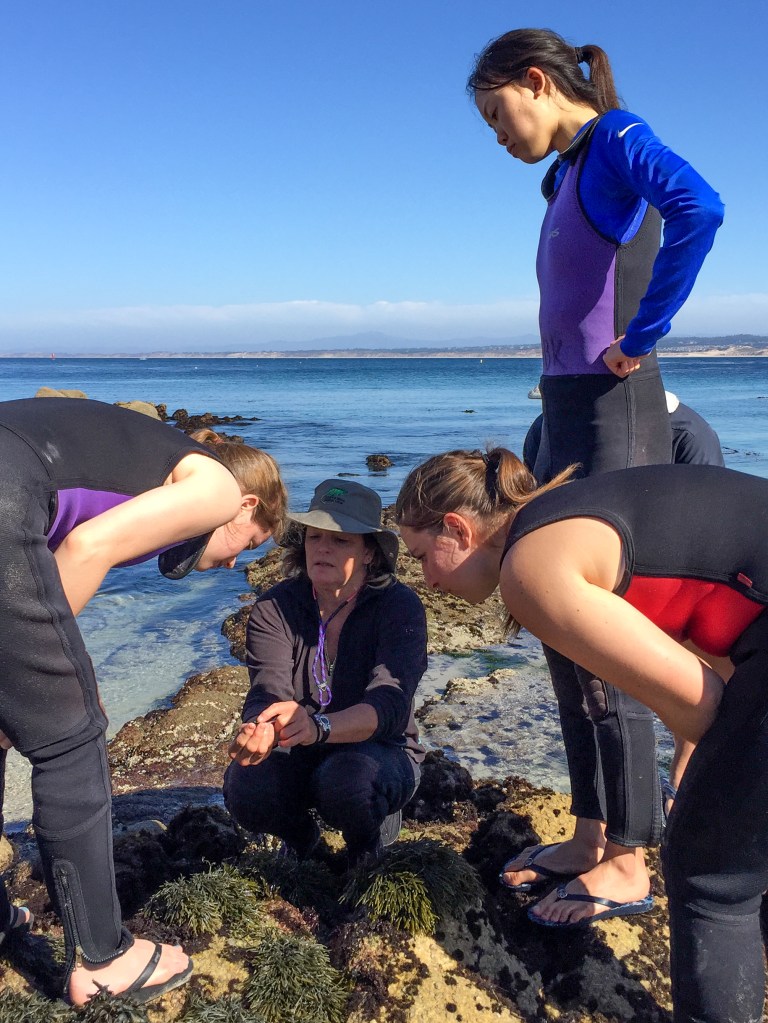
Freya shows off a hermit crab
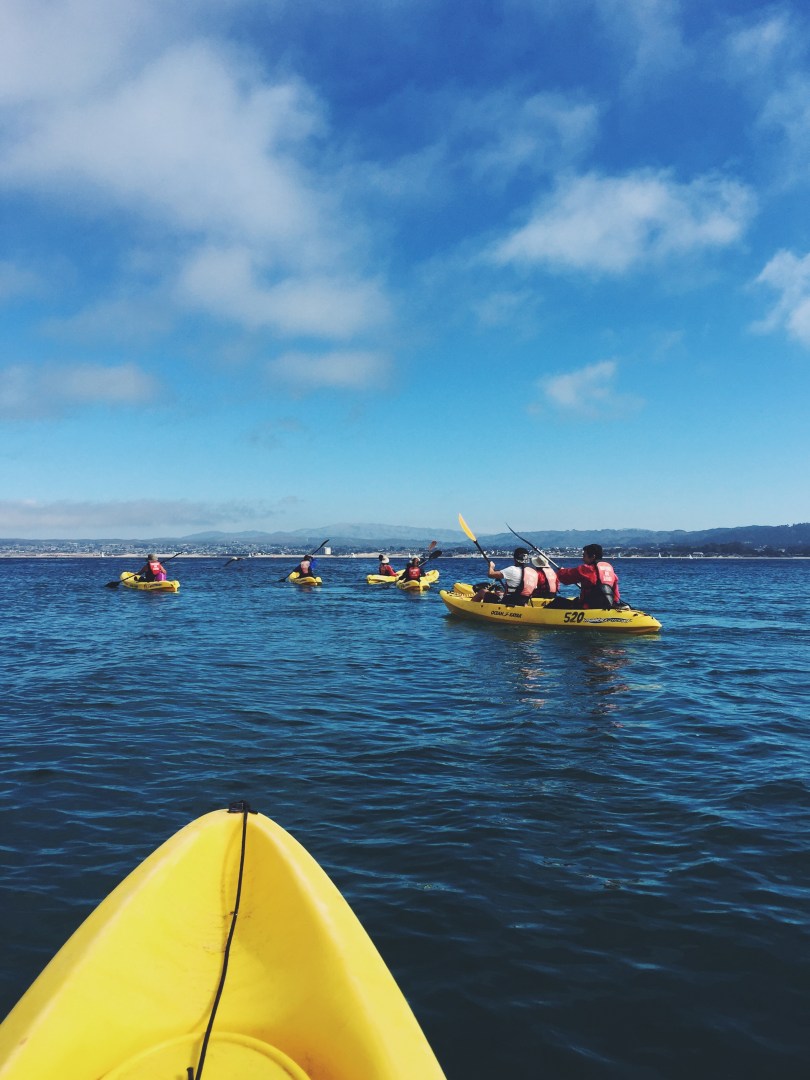
The kayaks were an awesome venue for telling these stories. While we stopped to watch a sea otter vigorously grooming itself (sea otters stay warm by trapping air bubbles in their thick fur, and also by eating up to 30% of their body weight each day—hence their dramatic food web impacts), I explained that otters are keystone species—they maintain and regulate the ecosystem and promote biodiversity, and when we remove them, there are major consequences all the way down the food web, called cascading trophic effects. As we drifted past the ruins of sardine canneries, I discussed how broad climatic cycles affect fisheries, perfectly punctuated by the school of anchovies that flashed beneath us, a signal of the coming El Niño. As we passed through the marine reserve on the way to a Hopkins beach for lunch, I talked about how individuals can make a difference through the marine reserve, with some anecdotes about the fiery Dr. Platt. I was very grateful that Freya Sommer, our dive safety officer, came along with me, not just to have help in case of any emergency, but also because she’s incredibly knowledgeable about the wildlife and ecology of the area. She came to the rescue for all the species identifications I didn’t know, and led a tidepooling expedition during lunch, a definite highlight.
I knew that the students were much more excited about kayaking than they were about discussing trophic cascades, and it was also more difficult than I anticipated to get everyone to raft together when I wanted to discuss something, so the course wasn’t as content-heavy as it could have been. But I think the students were thrilled to be out on the water on a beautiful day spotting sea otters and harbor seals—I certainly was—so I feel I achieved what I set out to do. I definitely think I achieved my coolest teacher goal—we were limited by van space to six students, and apparently the course filled within 5 seconds. I’m already looking forward to teaching it again next year!
I’m wrapping up my time in Peru, and looking forward to returning to the states in a few days. I have a ton to think about and a couple potential projects percolating: all in all it was a hugely useful and successful field session.
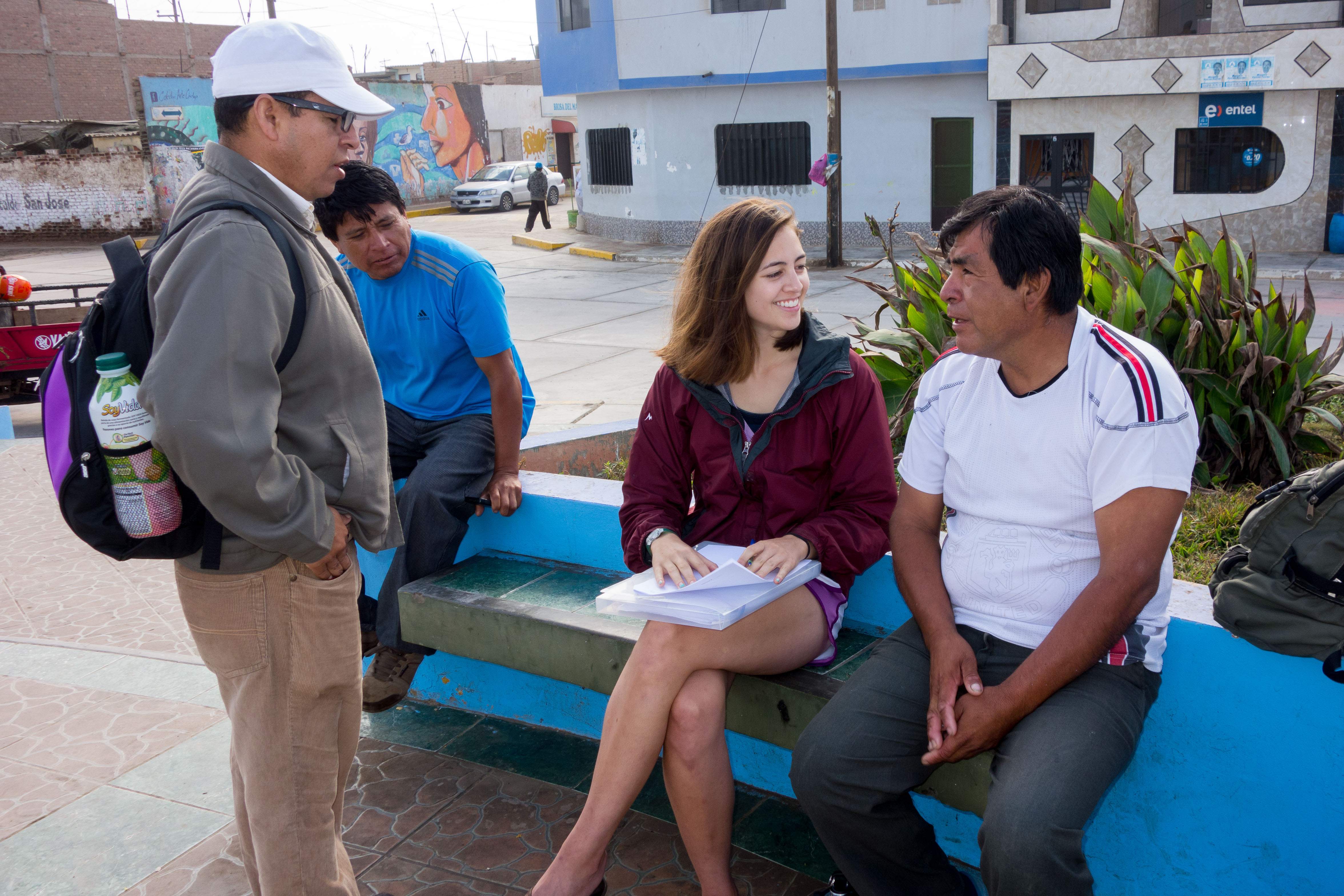
Unfortunately, Shellcatch, the sustainability certification company I’m hoping to collaborate with, rescheduled their visit for next month, but I went ahead with my pre-assessment surveys. I spent all of last week in San José interviewing fishermen and their families. Of course, it’s difficult to predict what the right questions will be before a project has started, but I thought it would be a good idea to get a sense of current rates of bycatch, flows of fish and money, and people’s attitudes toward their community, environment, and economic situation now, and track any changes as the certification project progresses.
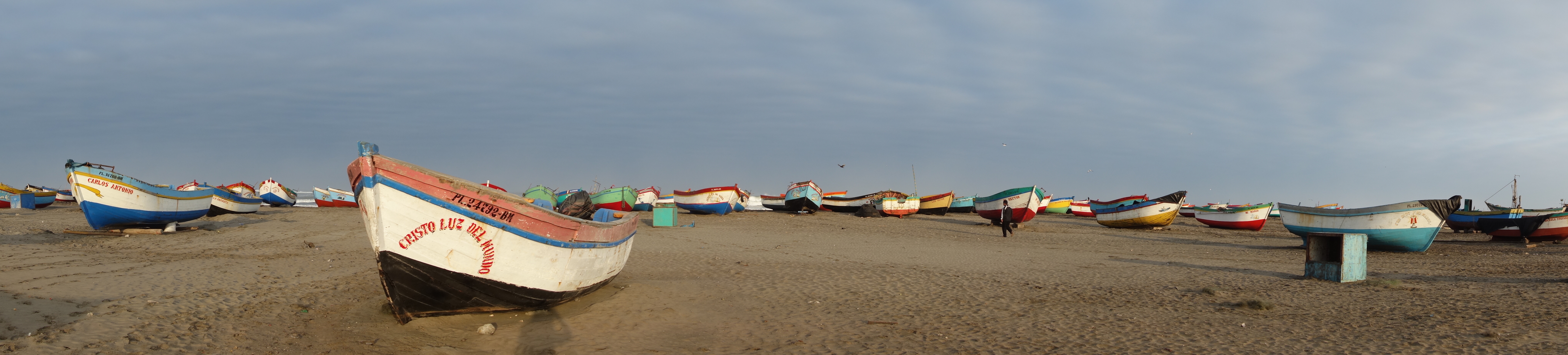
Brightly-colored “chalanas” bring fishers out to their bigger boats anchored offshore: one of many components of the fishing economy in San José.
I also asked questions about the role of women in the fishery and in the community, because I was interested, because women, as an integral part of the community and economy, also stand to be impacted by the Shellcatch project, and also because ProDelphinus is waiting to hear back from a grant to fund a women’s education and empowerment program. In order to run an effective program, it would first be helpful to better understand how the women are acting in the community, and what their needs are. I’m hopeful that the grant goes through, since educating women is arguably the most powerful environmental (and economic, and social, you name it) intervention possible.
I thought I’d get a chance to interview maybe 20 or 30 people at most, but after a whirlwind week I returned to Lima with 58 completed surveys! I had the incredible good fortune of working with David Sarmiento, a government official who collects fisheries landings data. He was born and raised in San José and can not only greet every single person in the town by name, but also instantly recall everything about their fishing habits, down to the scientific species names. He’s a beloved and respected figure throughout the town, and just being associated with him meant that people were happy to talk to me. Minutes after his introduction, people I hadn’t even met before welcomed me into their homes, plied me with food and gifts, and chatted candidly about their bycatch, fish prices, and difficulties with the powers that be. I’m going to be completely spoiled for all future survey work.
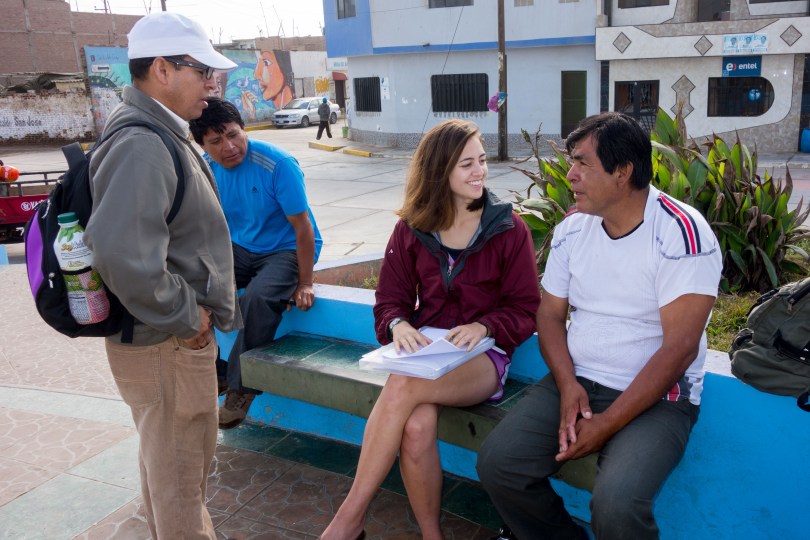
David (in the hat) was irreplaceable in his help in introducing me to interviewees and explaining some of their responses if they spoke too quickly!
My results are a basis waiting for future comparison, but I did learn a ton. For example, I had expected that women would primarily participate in the fishery and therefore economy by processing and selling their husbands’ fish. And, yes, most of them do. But I was surprised to learn that in addition, almost every woman that grows up in San José also learns several types of artwork—painting, cross stitch, embroidery, crochet. I was further surprised that during lean fishing times (which are common in Peru, because El Niño creates so much variability), rather than the men seeking other jobs, it’s the women that step up and sell their artwork, or sell their cooking. In studies of community resilience (the ability to withstand shocks or disruptions, like a big El Niño event), women are generally depicted as vulnerable victims, a marginalized group that loses out when shifts occur in the community. Not so here: the women seem to be a source of resilience! They are the ones that sustain their families in whatever way they can while their husbands, fathers, and sons wait for work, at the mercy of an unpredictable environment and a declining resource.
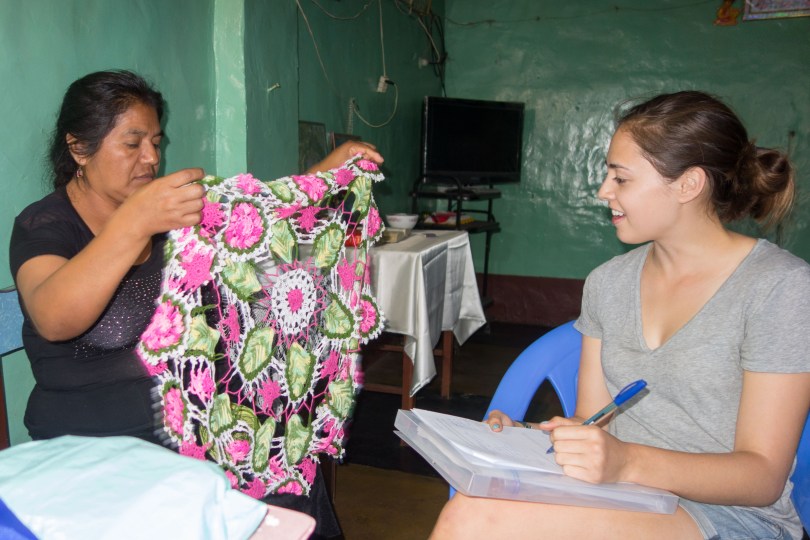
This woman showed me some of her beautifully detailed crochet work.
As always, the situation is complex, with intricate economic and social relationships within the community as well as with the government, broader market structure, and industrial fishery–I have a lot of information to take home with me and process over the next weeks and months. Many of the fishermen expressed eagerness to learn about how to improve their fishing methods, and how to avoid entangling turtles and mammals, primarily because they pose a threat to their expensive fishing gear (and, in the case of whales, their boats and lives), but some also expressed affection and a sense of stewardship for the “animalitos.” As for the women, they’re eager to find a way to export their artwork to broader markets, and expressed interest in education in nutrition, talking to their daughters about sex (it’s not uncommon to see girls pregnant at 14), and household accounting.

Interviews on the fly: tables and chairs weren’t always an option–I interviewed this fisherman in his “mototaxi.”
I’m overwhelmed with gratitude at the generosity and kindness of everyone I worked with, and am eager to return. When I asked one older fisher if he had any additional comments or questions, he looked at me and said, “I want for you to finish your studies. And I want for you to then come back, and to help us.” That’s exactly what I plan to do.
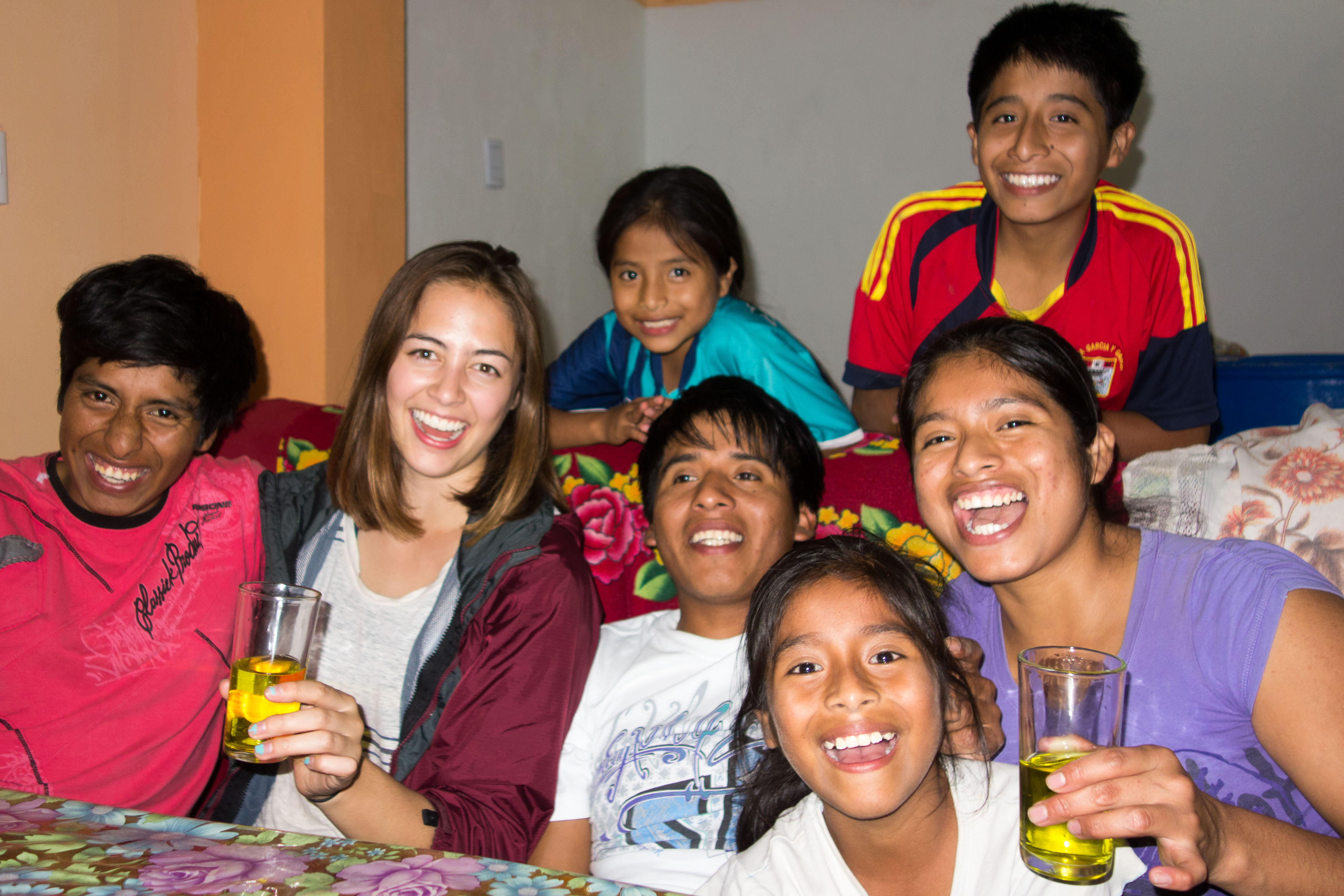
People welcomed me into their homes and into their families! I spent my evenings goofing off with this bunch and teaching them some English.
Mil gracias also to David, and everyone at ProDelphinus, especially Joanna and Jeff, and my wonderful field assistants Sergio, Astrid, and Diego. Nos vemos pronto!
I was surprised to learn upon arriving in Peru that a major target of the small-scale fishery is shark. Shark fishing has gained some notoriety in recent years from the incredibly wasteful practice of shark finning, in which fishers (often illegally, often in developing countries) catch sharks by the hundreds, discard their carcasses, and sell the fins for premium prices to Asian markets, where they’re used in prestigious shark fin soup.
But the surprising part is that the Peruvian shark fishery isn’t about shark fins at all, it’s primarily for the direct human consumption of meat. Shark is consumed all across Peru in popular seafood dishes like ceviche, although it’s caught and sold under the name “tollo” or “toyo,” and most Peruvians have no idea they’re eating “tiburón.” Peruvian fishers do sometimes sell the fins and enjoy a nice financial bonus, and by the sheer size of the fishery Peru is a major supplier of shark fins, but it’s almost an afterthought. Most of the sharks that I saw in the markets still had all their fins intact. The fishers I talked to were scandalized that Americans don’t eat shark meat. “But you have a lot of sharks in California, no? And you don’t eat any of them?”

“Tollo” sold at the fish market in Santa Rosa. The fins are nearly always intact but often not the heads, which can make the sharks difficult to identify.
Why was this surprising to me? It’s not that I was balking at an unfamiliar food—having long ago crossed the cuy threshold and braved Palau’s fruit bat soup, I’m fairly culinarily unflappable. It’s that sharks are so widely recognized as crucial to marine ecosystems, and are in such heavy decline, that you rarely hear about shark fishing outside the high-risk high-reward finning industry, or as accidental catch (although a quick FAO search reveals that shark consumption is far more common than I realized). As I struggled to put into Spanish for the group of fishers two weeks ago, sharks are usually apex predators in marine ecosystems, meaning that they keep all the subsequent levels of the food chain in balance. It’s counterintuitive, but more sharks mean more fish: by preying on a large variety of fish, they prevent any one group from getting out of hand and unbalancing the system. Think of wolves, a terrestrial parallel. As we belatedly learned in Yellowstone National Park, rather than threatening elk populations, wolves keep them healthy by preying on old and sick elk, and thus prevent elk populations from overwhelming their food source. Sharks do the same thing in the oceans, thus actually promoting the abundance of commercially important species. An oft-cited example is that the decline of sharks along America’s mid-Atlantic coast released predatory pressure on cownose rays, which boomed and gobbled up all the shellfish, much to the chagrin of scallop fishers.
Unfortunately, sharks are slow-growing and slow-reproducing, and can’t keep up with the estimated 100 million that we’re taking each year. Sharks are increasingly coming under international protection in the face of steep population declines.
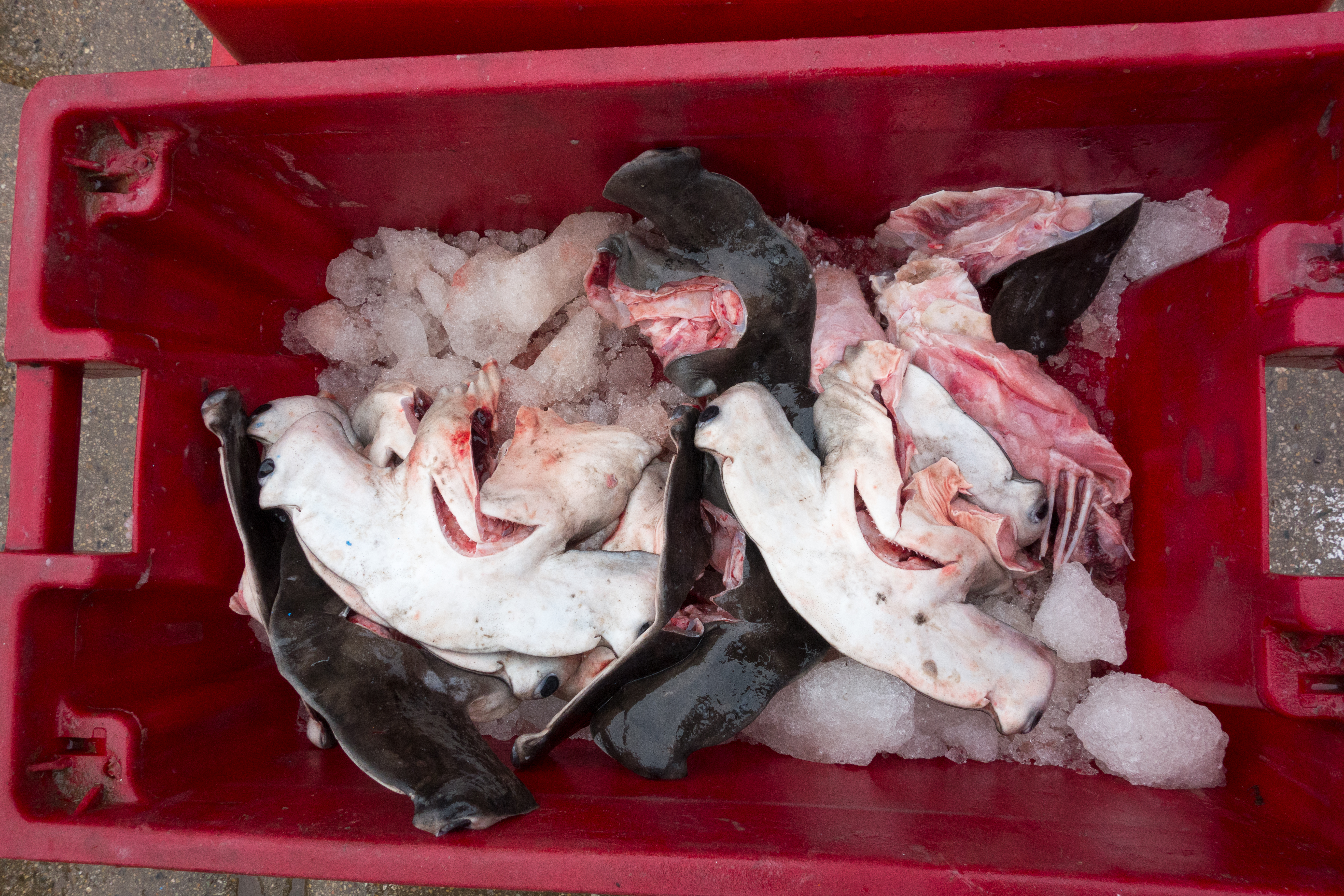
The scalloped hammerhead (Sphyrna zygaena) was listed under CITES in 2013.
Here’s the twist in the Peruvian shark fishery: it was in part introduced by the government and conservation NGOs in the late 1980s as a sustainability initiative. Sharks had long been targeted with gillnets (nets that hang vertically in the water), but these nets were also catching and killing a lot of dolphins. The Peruvian Ministry of Fisheries and a cetacean conservation agency workshopped shark longlining (as the name suggests, a long line with dozens to hundreds of suspended hooks) with fishermen, in an effort to save the dolphins and relieve pressure on dwindling fish stocks.
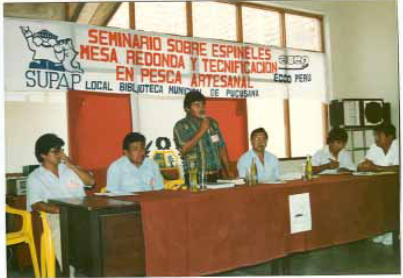
An image of a 1987 longline seminar in Pucusana (from a 1993 IUCN report by Julio Reyes)
Longlines are also notorious for their high rates of bycatch, so as a conservation biologist with “sharks = unsustainable; longlines= unsustainable” firmly etched into my brain, I was floored when I read this. I’m trying to get a better idea of how directly this initiative affected fishers and sharks–longlining has increased markedly here over the last few decades, but shark catches haven’t, likely due to fewer sharks combined with broader ecological or climatic influences. A thread I find particularly interesting is that in ProDelphinus interviews, fishers report first encountering and accidentally capturing critically endangered* leatherback sea turtles when they began fishing in the high seas, also in the late 80s. Was it the shift to longlining that brought artisanal fishers out to the high seas, or a broader decline in fished species closer to shore? Likely both. A definite unintended consequence of this policy, though, one dripping with irony, is that a popular type of bait for these shark longlines is dolphin meat.
I think this story is absolutely crazy. I have no idea how to feel about it. I certainly felt conflicted when I was presented with a plate of tollo ceviche my first day in San José! I definitely prefer the practice of using the whole shark as a protein source rather than slicing off just the fins, and many of our accepted seafood traditions are ecologically problematic—tuna, swordfish, and grouper are also important predators, for example. I attended an informational government meeting with fishermen about the shark fishery, and it’s clear that there’s a widespread lack of education about international endangered species laws and national size and catch restrictions at the fisher level, lack of awareness at the consumer level, and, the scourge of sustainable seafood initiatives everywhere, lack of traceability at every level of the supply chain. The use of dolphin meat for bait is truly unfortunate. A google search of “Peruvian shark fishery” yields incendiary accounts of The Cove-style butchery that, like many such fishery narratives, demonize fishermen as callous and greedy and put none of the accountability on the consumers and policies that impel the fishers’ choices. Restrictions or all-out bans are almost certainly in the future for Peruvian shark fisheries, but the consequences will be borne by these small-scale fishers who have nowhere else to turn.
*The IUCN classifies leatherbacks as vulnerable, and the East Pacific subpopulation as critically endangered.
Further reading:


 A Drop in the Ocean